
Hiragana chart: all 46 characters of the Japanese alphabet
46 basic characters, each one a syllable (か = ka). Open a row to see each character’s strokes, a memory tip, and words you can already read.
What is hiragana, and what is it for?
Hiragana (ひらがな) is the basic Japanese syllabary: 46 characters, each standing for one syllable, like か (ka). It writes particles, verb endings, and native Japanese words, and it’s usually the first thing you learn. Add the marks ゛ and ゜ (が, ga; ぱ, pa) and the small combinations (きゃ, kya), and it can spell every sound in Japanese.
| a | i | u | e | o | |
|---|---|---|---|---|---|
Constellation あ・か | |||||
| vowels | あa | いi | うu | えe | おo |
| K row | かka | きki | くku | けke | こko |
Constellation さ・た | |||||
| S row | さsa | しshi | すsu | せse | そso |
| T row | たta | ちchi | つtsu | てte | とto |
Constellation な・は | |||||
| N row | なna | にni | ぬnu | ねne | のno |
| H row | はha | ひhi | ふfu | へhe | ほho |
Constellation ま・や・ら | |||||
| M row | まma | みmi | むmu | めme | もmo |
| Y row | やya | ゆyu | よyo | ||
| R row | らra | りri | るru | れre | ろro |
Constellation わ・ん・が | |||||
| W row | わwa | をo | |||
| final N row | んn | ||||
The empty cells held sounds of old Japanese that are no longer used. Audio: synthetic voice (AI).
あ い う え お vowels · Constellation あ・か
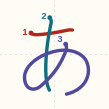
あ a
3 strokes
A cross tied into a big loop: someone unwrapping a present and going “Aaah!”
Pronunciation: Always “ah”, as in “father”.
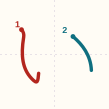
い i
2 strokes
Two short strokes side by side, like two lowercase i’s without their dots: “ee”.
Pronunciation: Always “ee”, as in “see”, but short.
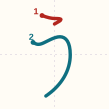
う u
2 strokes
An ear with a speck above it: “Ooh, that itches!”
Pronunciation: A short “oo” with relaxed lips, not pushed forward.
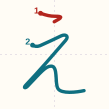
え e
2 strokes
A short dash over a zigzag: someone slipping on the stairs, “Eh?!”
Pronunciation: Always “eh”, as in “get”, never “ay”.
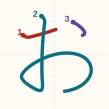
お o
3 strokes
Like あ, with one stroke flying off to the right: a ball kicked out of play, “Oh!”
Pronunciation: A pure “oh”, without the “w” English adds at the end of “go”.
Read: あい ai, love* · あう au, to meet (someone)* · いう iu, to say* *In everyday writing, usually written in kanji.
か き く け こ K row · Constellation あ・か
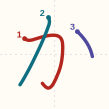
か ka
3 strokes
A hooked cross with a spark beside it: a KArate chop splitting a board.
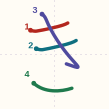
き ki
4 strokes
Two crossbars cut by a post, with a loose curve below: a KEY.
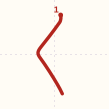
く ku
1 stroke
An open beak seen from the side: a cuckoo calling “koo, koo”.
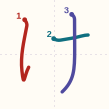
け ke
3 strokes
An open door on the left and someone rolling something in on the right: a KEg.
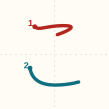
こ ko
2 strokes
Two short strokes lying one above the other: two COins stacked up.
Read: あか aka, red (noun)* · あかい akai, red (adjective)* · かお kao, face* *In everyday writing, usually written in kanji.
さ し す せ そ S row · Constellation さ・た
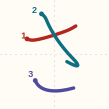
さ sa
3 strokes
A crossbar and a stroke that curls at the bottom: a SAmurai’s sword in its stand. In ち, the curl faces the other way.
Don’t confuse it with ち.
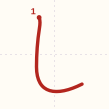
し shi (also typed si)
1 stroke
A fishhook: “SHE caught a fish!”
Pronunciation: Sounds like “she”.
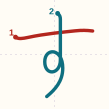
す su
2 strokes
A string with a knot tied in the middle: SUE ties a knot.
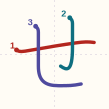
せ se
3 strokes
A chair seen from the side with a tall back: “SEt it down here.”
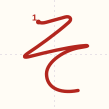
そ so
1 stroke
One continuous zigzag, like a straw bending into a SOda.
Read: あさ asa, morning* · いす isu, chair* · すし sushi, sushi *In everyday writing, usually written in kanji.
た ち つ て と T row · Constellation さ・た
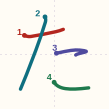
た ta
4 strokes
Looks like the letters “t” and “a” side by side: TA.
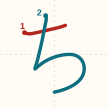
ち chi (also typed ti)
2 strokes
A face in profile with a big, pointy CHIn.
Pronunciation: Sounds like “chee”, as in “cheese”. For a plain “ti”, Japanese uses ティ (katakana).
Don’t confuse it with さ.
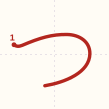
つ tsu (also typed tu)
1 stroke
One big wave: a TSUnami.
Pronunciation: A “t” and an “s” glued into one sound, like the “ts” in “cats”: “tsu”, never “tu” or “su”.
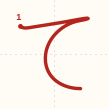
て te
1 stroke
An arm reaching out with an open hand: count your TEN fingers.
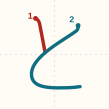
と to
2 strokes
A nail leaning against a curved board: a splinter in your TOE.
Read: うた uta, song* · した shita, below, under* · きた kita, north* *In everyday writing, usually written in kanji.
な に ぬ ね の N row · Constellation な・は
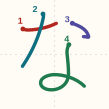
な na
4 strokes
A cross and a looped rope beside it: a hammock for a NAp.
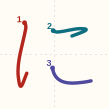
に ni
3 strokes
A post with two short strokes beside it: someone kneeling, KNEE to the ground.
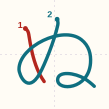
ぬ nu
2 strokes
Like め, but with a loop at the end: NOOdles twirled on chopsticks. め has no loop.
Don’t confuse it with め.
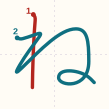
ね ne
2 strokes
A post and a curled tail: a cat, which in Japanese is NEko (ねこ).
Don’t confuse it with れ.
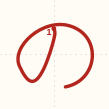
の no
1 stroke
A single swirling stroke, like the slash through a “NO” sign.
Read: なつ natsu, summer* · なに nani, what* · いぬ inu, dog* *In everyday writing, usually written in kanji.
は ひ ふ へ ほ H row · Constellation な・は
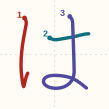
は ha
3 strokes
Someone leaning on a wall, laughing “HA HA”.
Pronunciation: A plain “h”, as in “hot”. As a particle, it’s read “wa”.
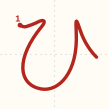
ひ hi
1 stroke
A wide grin: a giggle, “HEE HEE”.
Pronunciation: A breathy “h” with the middle of the tongue raised toward the roof of the mouth, like the start of “huge”.
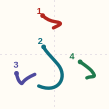
ふ fu (also typed hu)
4 strokes
Loose strokes like a face blowing out a candle: “FOO”.
Pronunciation: A soft puff between “f” and “h”: your lips don’t touch your teeth.
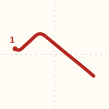
へ he
1 stroke
A little hill: “HEh, I made it to the top!”
Pronunciation: A plain “h”, as in “hot”. As a particle, it’s read “e”.
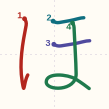
ほ ho
4 strokes
Like は, with one more stroke on top like a hat: Santa, “HO HO HO”.
Pronunciation: A plain “h”, as in “hot”.
Read: はな hana, flower* · ひと hito, person* · ふね fune, boat, ship* *In everyday writing, usually written in kanji.
ま み む め も M row · Constellation ま・や・ら
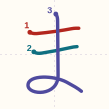
ま ma
3 strokes
A post with two crossbars and a loop at the bottom: MAma tying a knot.
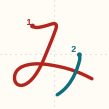
み mi
2 strokes
Looks like a handwritten “21”: “That’s ME at twenty-one.”
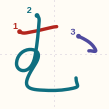
む mu
3 strokes
A cow seen from the side with its tail up: “MOO”.
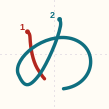
め me
2 strokes
An eye under a crossed brow. Eye in Japanese is me (目). No loop at the end, unlike ぬ.
Don’t confuse it with ぬ.
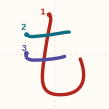
も mo
3 strokes
A fishhook with two worms on it: “MORE fish!”
Read: うみ umi, sea* · みみ mimi, ear* · くま kuma, bear *In everyday writing, usually written in kanji.
や ゆ よ Y row · Constellation ま・や・ら
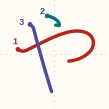
や ya
3 strokes
A YAk with one big horn.
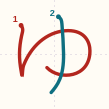
ゆ yu
2 strokes
A fish leaping inside its tank: “YOU-hoo!”
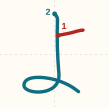
よ yo
2 strokes
A YO-yo hanging from its string.
Read: やま yama, mountain* · ゆき yuki, snow* · ゆめ yume, dream* *In everyday writing, usually written in kanji.
ら り る れ ろ R row · Constellation ま・や・ら
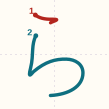
ら ra
2 strokes
A short dash above a hook: a RAbbit sitting up.
Pronunciation: A single light tap of the tongue, like the “tt” in American “butter”. Never the English “r”, and never rolled.
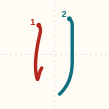
り ri
2 strokes
Two streams running side by side, lined with REEds.
Pronunciation: A single light tap of the tongue, like the “tt” in American “butter”. Never the English “r”, and never rolled.
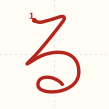
る ru
1 stroke
A tail that ends in a loop: a ROOster’s curled tail. ろ has no loop.
Pronunciation: A single light tap of the tongue, like the “tt” in American “butter”. Never the English “r”, and never rolled.
Don’t confuse it with ろ.
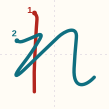
れ re
2 strokes
Someone kneeling to REst, one leg stretched out behind.
Pronunciation: A single light tap of the tongue, like the “tt” in American “butter”. Never the English “r”, and never rolled.
Don’t confuse it with ね.
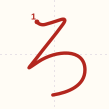
ろ ro
1 stroke
Like る without the loop: the ROad bends but never loops back.
Pronunciation: A single light tap of the tongue, like the “tt” in American “butter”. Never the English “r”, and never rolled.
Don’t confuse it with る.
Read: さくら sakura, cherry tree, cherry blossom · そら sora, sky* · りす risu, squirrel *In everyday writing, usually written in kanji.
わ を W row · Constellation わ・ん・が
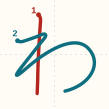
わ wa
2 strokes
A post and a closed curve, no tail: “WAH!” ね has a tail; れ has a leg.
Don’t confuse it with ね.
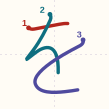
を o (also typed wo)
3 strokes
Someone tripping with their mouth wide open: “WHOA!”
Pronunciation: Today it sounds “o”, like お, and appears almost only as a particle.
Read: わたし watashi, I, me* · かわ kawa, river* · にわ niwa, garden, yard* *In everyday writing, usually written in kanji.
ん final N row · Constellation わ・ん・が
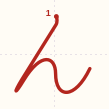
ん n (also typed nn)
1 stroke
A handwritten “n”, its leg bent.
Pronunciation: An “n” that closes the syllable. Before b, p and m it sounds like “m”: しんぶん (shimbun, newspaper).
Read: ほん hon, book* · みかん mikan, mandarin orange · さん san, three; Mr./Ms. (after a name) *In everyday writing, usually written in kanji.
Dakuten and handakuten
Two small ticks (゛) make the sound voiced: か → が (ka → ga). The circle (゜) goes only on the H row and turns it into P: は → ぱ (ha → pa). ぢ and づ sound like じ and ず and are rare.
| a | i | u | e | o | |
|---|---|---|---|---|---|
| g | がga | ぎgi | ぐgu | げge | ごgo |
| z | ざza | じji | ずzu | ぜze | ぞzo |
| d | だda | ぢji | づzu | でde | どdo |
| b | ばba | びbi | ぶbu | べbe | ぼbo |
| p | ぱpa | ぴpi | ぷpu | ぺpe | ぽpo |
Combinations
A character from the i column followed by a small ゃ, ゅ, or ょ makes one syllable: き + ゃ = きゃ (kya). Size matters: きや (ki-ya) is two. A small っ doubles the next consonant: きって (kitte, stamp) is not きて (kite, “come”). Vowel length changes the meaning too: おばさん (obasan, aunt) is not おばあさん (obāsan, grandmother).
| a | u | o | |
|---|---|---|---|
| ky | きゃkya | きゅkyu | きょkyo |
| sh | しゃsha | しゅshu | しょsho |
| ch | ちゃcha | ちゅchu | ちょcho |
| ny | にゃnya | にゅnyu | にょnyo |
| hy | ひゃhya | ひゅhyu | ひょhyo |
| my | みゃmya | みゅmyu | みょmyo |
| ry | りゃrya | りゅryu | りょryo |
| gy | ぎゃgya | ぎゅgyu | ぎょgyo |
| j | じゃja | じゅju | じょjo |
| by | びゃbya | びゅbyu | びょbyo |
| py | ぴゃpya | ぴゅpyu | ぴょpyo |
Kana Universe · Fluentei RPG
Start from zero in Kana Universe
Starting from zero, you learn hiragana and katakana in Fluentei RPG’s Kana Universe, row by row, with bosses to beat along the way.
 Opens in a new tab.
Coming soon to Google Play.
How to memorize hiragana
- One row a day. Read the tips for the row’s characters, say each sound out loud, and quiz yourself until you get every one right the first time.
- Hide the romaji as soon as you recognize the row.
- Read words made only of the characters you already know: that’s what makes them stick.
Frequently asked questions
How many hiragana characters are there?
There are 46 basic characters, and each one is a syllable (か, ka). With the dakuten and handakuten marks (が, ga; ぱ, pa) and the combinations with a small ゃ, ゅ, or ょ (きゃ, kya), hiragana can spell every sound in Japanese.
Should I learn hiragana or katakana first?
Hiragana first: it shows up in almost every sentence, including particles and verb endings. Katakana comes right after and goes faster, because the sounds are the same.
How long does it take to learn hiragana?
With 15 to 20 minutes a day, one row a day, many people recognize all 46 characters within one to three weeks. Reading fluently comes later, from actually reading.
Can I practice hiragana with music?
Yes, once you know the characters: Japanese lyrics are full of hiragana, and hearing a line while you read it ties each character to its sound. Furigana, the hiragana reading printed above kanji, lets you read even the words you don’t know in kanji yet.
Do I need to learn to write by hand?
Not to read. But writing each character a few times, in stroke order, helps it stick and helps you tell the lookalike pairs apart.
Should I keep using romaji?
Use romaji only as a bridge for the first few weeks. Hide it as soon as you can and read straight in hiragana.
See also: Katakana · Kanji · Everyday Japanese phrases · How to learn Japanese · Learn Japanese with music · Furigana