JLPT · Level N3
JLPT N3: study with songs and readings.
Texts with concrete content on everyday topics: prepare for N3 with songs, readings, and the level’s vocabulary.
 Opens in a new tab.
Coming soon to Google Play.
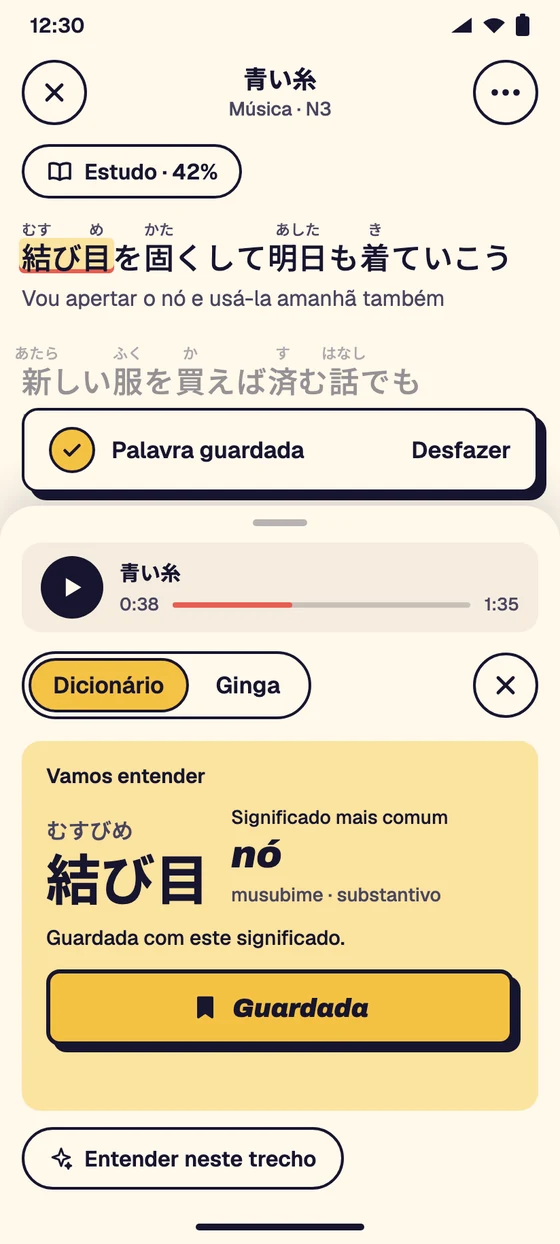
What N3 asks
N3 on three fronts.
Read texts with concrete content on everyday topics, and follow everyday conversations at close to natural speed.
The Fluentei lineStuck to Got it15 minutes a day
- 01よむN3 readings, with furigana
- 02きくN3 songs, with the lyrics
- 03おぼえるN3 words, back in Review
N3 words
N3 words to start with.
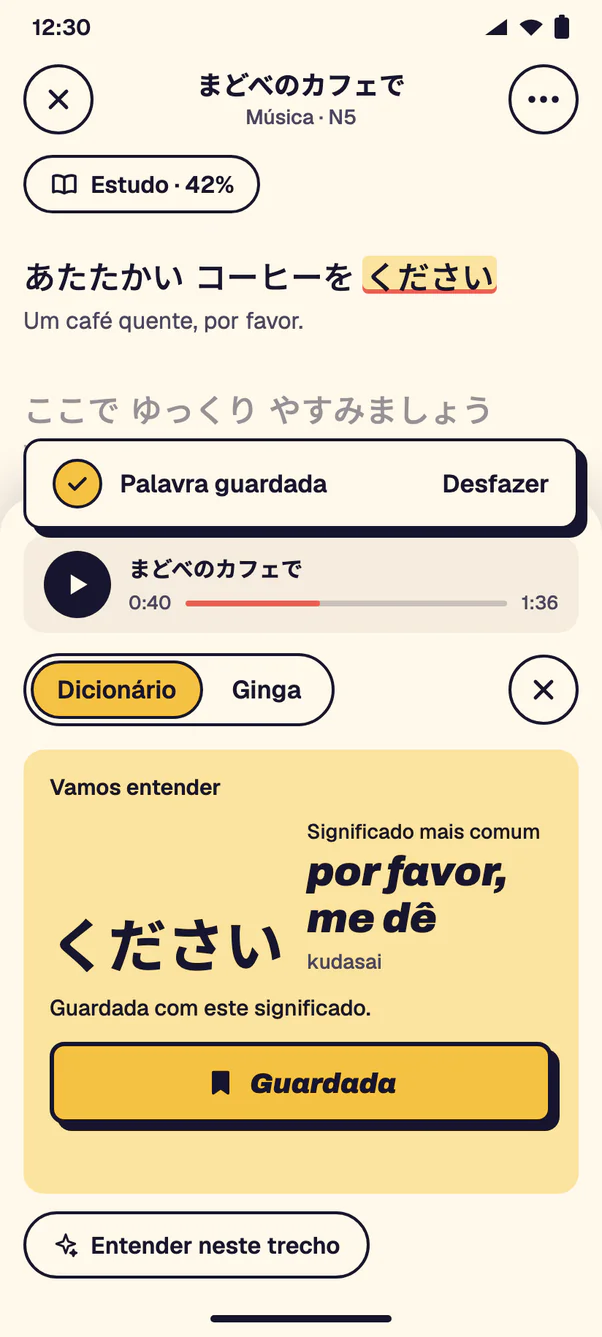
Real words from the level, with their reading and meaning. In the app, every word you tap goes into your Vocabulary and comes back in Review.
- 様子yousustate, how things look
- 理解rikaiunderstanding
- 情報jouhouinformation
- 結果kekkaresult
- 笑顔egaosmiling face, smile
- 記憶kiokumemory
- 実はjitsu waactually, to tell the truth
- 突然totsuzensuddenly
- 不思議fushigistrange, mysterious
Who it’s for
It’s for you.
Questions
JLPT N3, answered.

What should I study for the JLPT N3?
N3 asks you to read texts with concrete content on everyday topics, and follow everyday conversations at close to natural speed. In Fluentei, you practice with N3 readings and songs, and the words you save come back in your Review.
How many kanji are on the JLPT N3?
There’s been no official number since 2010: the JLPT doesn’t publish a kanji list. By Jonathan Waller’s unofficial lists, there are 612 kanji up to N3, counting the levels below it. How many kanji to learn, level by level.
Will I pass the JLPT?
Each song and reading shows an approximate level, from N5 to N1, so you can choose what to study and track your progress. The reading, listening, and vocabulary you practice here help you prepare, and the certificate comes from the official JLPT exam.
Do the readings and songs follow the JLPT?
Each reading and song shows an approximate level, as a guide to its difficulty.
Is there N3 vocabulary?
Yes. Tap any word in an N3 song or reading and its meaning shows up in English; the word goes into your Vocabulary and comes back in Review at the right time.
What comes after N3?
N2: you read clearly written texts on a range of topics, such as newspaper articles and commentary.
Your N3 starts today. With what you love.
Songs, readings, and N3 words, with explanations in English.
Opens in a new tab.Coming soon to Google Play.