Readings · N5
Easy Japanese reading for beginners.
Typical phrases and sentences written in hiragana, katakana, and basic kanji, with furigana above the kanji and every word explained in English.
 Opens in a new tab.
Coming soon to Google Play.

How it works
From stuck to got it.
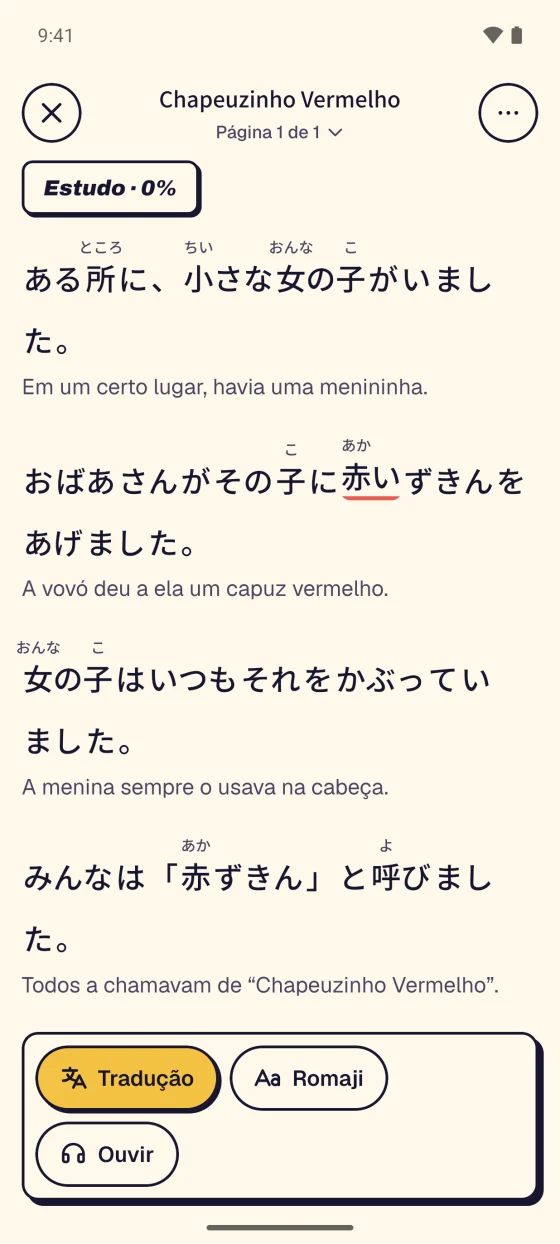
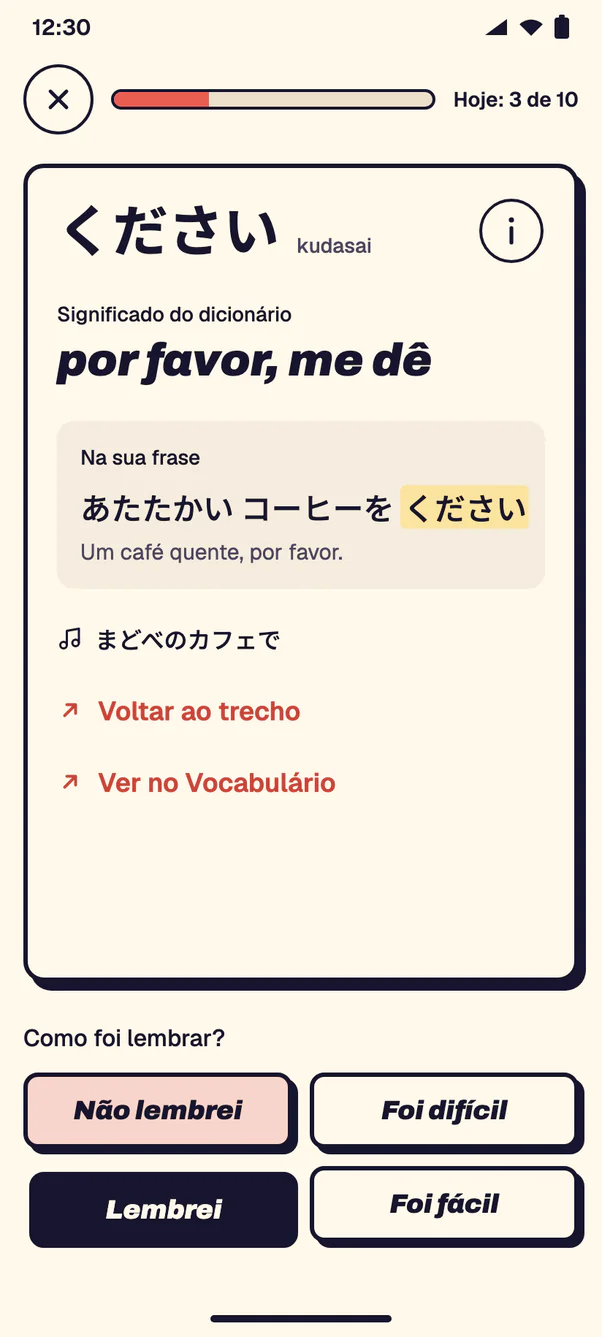
A reading becomes study in three moves: you read, tap a word, and it comes back at the right time.
The Fluentei lineStuck to Got it15 minutes a day
- 01よむRead, with furigana
- 02わかるTap a word and understand it
- 03おぼえてるRemember it at the right time

Read a passage
Start with a story you know.
The opening of 赤ずきん, adapted for N5, with furigana above the kanji and each line translated. The Readings include stories you already know, like “Little Red Riding Hood”, “Momotaro, the Peach Boy”, and “The Grateful Crane”.
森の道で、赤ずきんは狼に会いました。
On the forest path, Little Red Riding Hood met a wolf.
「どこへ行くの?」
“Where are you going?”
「この道の先の、おばあさんの家です。」
“To Grandma’s house, at the end of this path.”
Who it’s for
It’s for you.
Questions
N5 reading, answered.

What can I read at N5?
At N5, you read typical phrases and sentences written in hiragana, katakana, and basic kanji. In Fluentei’s N5 readings, the furigana sits above the kanji and every word is explained in English.
How many kanji do I need to read at N5?
There’s been no official number since 2010: the JLPT doesn’t publish a kanji list. By Jonathan Waller’s unofficial lists, there are 79 kanji at N5; furigana lets you read before you know them all. How many kanji to learn, level by level.
Do the Readings follow the JLPT?
Each reading’s level is an approximate guide to its difficulty.
What comes after N5?
N4: you read texts on familiar everyday topics, written with basic vocabulary and kanji. Japanese reading practice at N4.
Read real Japanese. At your level.
Readings from N5 to N1, with furigana and every word explained in English.
Opens in a new tab.Coming soon to Google Play.

Keep going