
Katakana chart: all 46 characters
The same sounds as hiragana in a sharper hand, used for foreign words, names, and emphasis. Open a row to see each character’s strokes, a memory tip, and words you can already read.
What is katakana, and what is it for?
Katakana (カタカナ) is one of the two Japanese syllabaries, alongside hiragana: 46 basic characters with the same sounds as hiragana, drawn with straighter strokes (ア and あ are both “a”). It mostly writes words borrowed from other languages, such as コーヒー (kōhī, coffee) and テレビ (terebi, TV), foreign names, such as アメリカ (Amerika, America), and words written for emphasis. For sounds Japanese never had, it uses combinations of its own, such as ファ (fa) and ティ (ti).
| a | i | u | e | o | |
|---|---|---|---|---|---|
Constellation ア・カ | |||||
| vowels | アa | イi | ウu | エe | オo |
| K row | カka | キki | クku | ケke | コko |
Constellation サ・タ | |||||
| S row | サsa | シshi | スsu | セse | ソso |
| T row | タta | チchi | ツtsu | テte | トto |
Constellation ナ・ハ | |||||
| N row | ナna | ニni | ヌnu | ネne | ノno |
| H row | ハha | ヒhi | フfu | ヘhe | ホho |
Constellation マ・ヤ・ラ・ワ | |||||
| M row | マma | ミmi | ムmu | メme | モmo |
| Y row | ヤya | ユyu | ヨyo | ||
| R row | ラra | リri | ルru | レre | ロro |
| W row | ワwa | ヲo | |||
| final N row | ンn | ||||
The empty cells held sounds of old Japanese that are no longer used. Audio: synthetic voice (AI).
ア イ ウ エ オ vowels · Constellation ア・カ
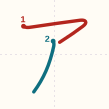
ア a
2 strokes
A crooked A, its flap bent to the left: A.
Pronunciation: Always “ah”, as in “father”.
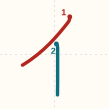
イ i
2 strokes
A person leaning on a walking stick: “EE, my back!”
Pronunciation: Always “ee”, as in “see”, but short.
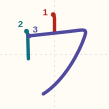
ウ u
3 strokes
Like う, with a hood on: “OOH, it’s cold!”
Pronunciation: A short “oo” with relaxed lips, not pushed forward.
Don’t confuse it with ワ.
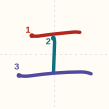
エ e
3 strokes
A steel I-beam in an Elevator shaft.
Pronunciation: Always “eh”, as in “get”, never “ay”.
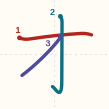
オ o
3 strokes
A cross with one arm hanging: an OGre with its arms open.
Pronunciation: A pure “oh”, without the “w” English adds at the end of “go”.
Read: キウイ kiui, kiwi · カカオ kakao, cacao · イカ ika, squid (on menus)
カ キ ク ケ コ K row · Constellation ア・カ
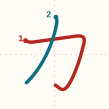
カ ka
2 strokes
Almost the same as か, without the little spark: KA.
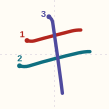
キ ki
3 strokes
A key with two teeth: the KEY again, like き.
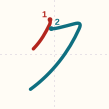
ク ku
2 strokes
A beak seen from the side with a tuft on top: the cuckoo again, “koo”.
Don’t confuse it with タ.
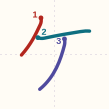
ケ ke
3 strokes
A crooked K with a long leg: KE.
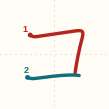
コ ko
2 strokes
The corner of a box, open to the left: a COrner.
Read: カキ kaki, oyster (on menus) · ココア kokoa, hot chocolate; cocoa powder · ケーキ kēki, cake
サ シ ス セ ソ S row · Constellation サ・タ
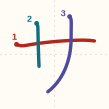
サ sa
3 strokes
A crossbar on two legs, the right one long and bent: a SAwhorse.
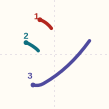
シ shi (also typed si)
3 strokes
The dashes sit on the left and the long stroke sweeps up from the bottom: a sideways smile, “SHE’s smiling”.
Pronunciation: Sounds like “she”.
Don’t confuse it with ツ.
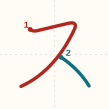
ス su
2 strokes
A stick figure running, one leg kicked back: SUper fast.
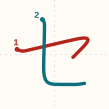
セ se
2 strokes
Almost the same as せ: SEt them side by side and they match.
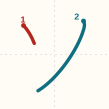
ソ so
2 strokes
One dash on top and a long stroke falling from above: a drop into the SOda. In ン, the long stroke rises.
Don’t confuse it with ン.
Read: アイス aisu, ice cream · スキー sukī, skiing · サッカー sakkā, soccer
タ チ ツ テ ト T row · Constellation サ・タ
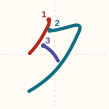
タ ta
3 strokes
It’s ク (ku) with a dash inside: a TAco stuffed in the cuckoo’s beak.
Don’t confuse it with ク.
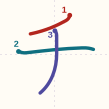
チ chi (also typed ti)
3 strokes
A T with a slanted cap on top: a CHImney with its hat on.
Pronunciation: Sounds like “chee”, as in “cheese”. For a plain “ti”, Japanese uses ティ (katakana).
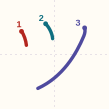
ツ tsu (also typed tu)
3 strokes
The dashes sit on top and the long stroke falls from above: the wave of a TSUnami crashing down.
Pronunciation: A “t” and an “s” glued into one sound, like the “ts” in “cats”: “tsu”, never “tu” or “su”.
Don’t confuse it with シ.
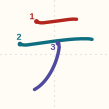
テ te
3 strokes
A T with one more bar on top: an old TElevision antenna.
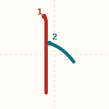
ト to
2 strokes
A post with a twig sticking out to the right: a TOtem pole.
Read: タクシー takushī, taxi · セーター sētā, sweater · スーツ sūtsu, suit
ナ ニ ヌ ネ ノ N row · Constellation ナ・ハ
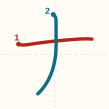
ナ na
2 strokes
A cross whose foot bends to the left: a bent nail, “NAh, hit it again.”
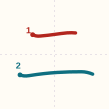
ニ ni
2 strokes
Two flat strokes, like the kanji 二 (ni), which means “two”.
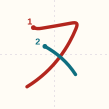
ヌ nu
2 strokes
フ crossed by a short dash: chopsticks lifting NOOdles. メ has no flat top.
Don’t confuse it with メ.
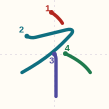
ネ ne
4 strokes
A dot, a roof, and two open legs: a NEcktie hanging on a hook.
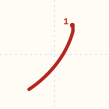
ノ no
1 stroke
A single stroke falling from right to left: a big “NO” slash.
Read: テニス tenisu, tennis · カヌー kanū, canoe · ナッツ nattsu, nuts
ハ ヒ フ ヘ ホ H row · Constellation ナ・ハ
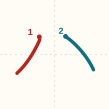
ハ ha
2 strokes
Two strokes spreading apart like the kanji 八 (hachi, eight): HA.
Pronunciation: A plain “h”, as in “hot”.
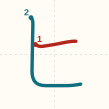
ヒ hi
2 strokes
An L with a tongue: someone laughing “HEE HEE” with their tongue out.
Pronunciation: A breathy “h” with the middle of the tongue raised toward the roof of the mouth, like the start of “huge”.
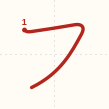
フ fu (also typed hu)
1 stroke
A single stroke, like a curved 7: a “FOO” of breath falling.
Pronunciation: A soft puff between “f” and “h”: your lips don’t touch your teeth.
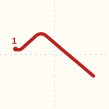
ヘ he
1 stroke
The same as へ, the little hill: HE.
Pronunciation: A plain “h”, as in “hot”.
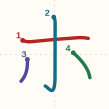
ホ ho
4 strokes
A cross with two drops below: Santa’s Christmas tree, “HO HO HO”.
Pronunciation: A plain “h”, as in “hot”.
Read: ナイフ naifu, knife · ハート hāto, heart (the symbol) · ヒーター hītā, heater
マ ミ ム メ モ M row · Constellation マ・ヤ・ラ・ワ
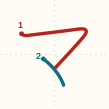
マ ma
2 strokes
A sail with a dash beneath it: MAma’s little sailboat.
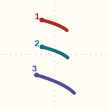
ミ mi
3 strokes
Three slanted strokes, like a cat’s whiskers: “MEow”.
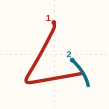
ム mu
2 strokes
An elbow with a dash: the cow lifting its tail, “MOO”, like む.
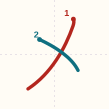
メ me
2 strokes
A crooked X: the mark on a treasure map, “find ME”.
Don’t confuse it with ヌ.
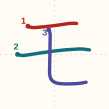
モ mo
3 strokes
Like も, with straight strokes: MORE.
Read: トマト tomato, tomato · ゲーム gēmu, game, video game · ハム hamu, ham
ヤ ユ ヨ Y row · Constellation マ・ヤ・ラ・ワ
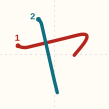
ヤ ya
2 strokes
Like や, without the loose dash: YA.
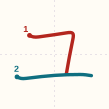
ユ yu
2 strokes
A square U knocked onto its side, with a longer base: “YOU”.
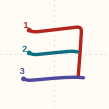
ヨ yo
3 strokes
A backward E: YO.
Read: タイヤ taiya, tire · パパイヤ papaiya, papaya · ユーザー yūzā, user
ラ リ ル レ ロ R row · Constellation マ・ヤ・ラ・ワ
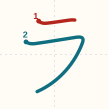
ラ ra
2 strokes
A dash over a 7: ら’s rabbit, now wearing a flat hat.
Pronunciation: A single light tap of the tongue, like the “tt” in American “butter”. Never the English “r”, and never rolled.
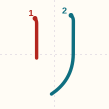
リ ri
2 strokes
Like り, only straighter: two REEds.
Pronunciation: A single light tap of the tongue, like the “tt” in American “butter”. Never the English “r”, and never rolled.
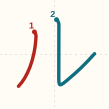
ル ru
2 strokes
Two legs, the right one kicking up: a kangaROO leaping.
Pronunciation: A single light tap of the tongue, like the “tt” in American “butter”. Never the English “r”, and never rolled.
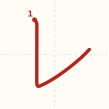
レ re
1 stroke
A long check mark: “REady!”
Pronunciation: A single light tap of the tongue, like the “tt” in American “butter”. Never the English “r”, and never rolled.
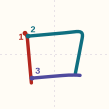
ロ ro
3 strokes
A little square, like a ROBOT’s head.
Pronunciation: A single light tap of the tongue, like the “tt” in American “butter”. Never the English “r”, and never rolled.
Read: ホテル hoteru, hotel · ブラジル burajiru, Brazil · カステラ kasutera, castella, a Japanese sponge cake
ワ ヲ W row · Constellation マ・ヤ・ラ・ワ
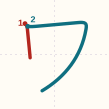
ワ wa
2 strokes
Like ウ without the dash on top: “WAH, someone took my hood!”
Don’t confuse it with ウ.
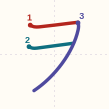
ヲ o (also typed wo)
3 strokes
Like フ with an extra bar in the middle: a mouth wide open, “WHOA!”
Pronunciation: Sounds “o”, like オ, and you’ll rarely see it.
Read: ワイン wain, wine · ハワイ hawai, Hawaii
ン final N row · Constellation マ・ヤ・ラ・ワ
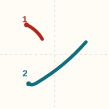
ン n (also typed nn)
2 strokes
The long stroke rises from the bottom up, like the leg of a handwritten “n”. In ソ, it falls.
Pronunciation: An “n” that closes the syllable. Before b, p and m it sounds like “m”: コンピューター (kompyūtā, computer).
Don’t confuse it with ソ.
Read: サンパウロ sanpauro, São Paulo · サンバ sanba, samba · パン pan, bread
Dakuten and handakuten
Two small ticks (゛) make the sound voiced: カ → ガ (ka → ga). The circle (゜) goes only on the H row and turns it into P: ハ → パ (ha → pa). ヂ and ヅ sound like ジ and ズ and are rare.
| a | i | u | e | o | |
|---|---|---|---|---|---|
| g | ガga | ギgi | グgu | ゲge | ゴgo |
| z | ザza | ジji | ズzu | ゼze | ゾzo |
| d | ダda | ヂji | ヅzu | デde | ドdo |
| b | バba | ビbi | ブbu | ベbe | ボbo |
| p | パpa | ピpi | プpu | ペpe | ポpo |
Combinations
A character from the i column followed by a small ャ, ュ, or ョ makes one syllable: キ + ャ = キャ (kya). Size matters: キヤ (ki-ya) is two. A small ッ doubles the next consonant, and the bar ー makes the vowel long: サッカー (sakkā, soccer).
| a | u | o | |
|---|---|---|---|
| ky | キャkya | キュkyu | キョkyo |
| sh | シャsha | シュshu | ショsho |
| ch | チャcha | チュchu | チョcho |
| ny | ニャnya | ニュnyu | ニョnyo |
| hy | ヒャhya | ヒュhyu | ヒョhyo |
| my | ミャmya | ミュmyu | ミョmyo |
| ry | リャrya | リュryu | リョryo |
| gy | ギャgya | ギュgyu | ギョgyo |
| j | ジャja | ジュju | ジョjo |
| by | ビャbya | ビュbyu | ビョbyo |
| py | ピャpya | ピュpyu | ピョpyo |
Extended sounds
For sounds from other languages, katakana pairs a character with a small vowel: “fork” becomes フォーク (fōku), and “party” パーティー (pātī).
| a | i | u | e | o | |
|---|---|---|---|---|---|
| f | ファfa | フィfi | フェfe | フォfo | |
| t/d | ティti | ディdi | トゥtu | ドゥdu | |
| w | ウィwi | ウェwe | ウォwo | ||
| v | ヴァva | ヴィvi | ヴvu | ヴェve | ヴォvo |
| others | シェshe | ジェje | チェche | ツァtsa |
Kana Universe · Fluentei RPG
Start from zero in Kana Universe
Starting from zero, you learn hiragana and katakana in Fluentei RPG’s Kana Universe, row by row, with bosses to beat along the way.
 Opens in a new tab.
Coming soon to Google Play.
How to memorize katakana
- One row a day. Read the tips for the row’s characters, say each sound out loud, and quiz yourself until you get every one right the first time.
- Hide the romaji as soon as you recognize the row.
- Compare with hiragana: カ and か are nearly the same, and the sounds are identical.
Frequently asked questions
How many katakana characters are there?
There are 46 basic characters, the same 46 syllables as hiragana. With the dakuten and handakuten marks (ガ, ga; パ, pa), the combinations with a small ャ, ュ, or ョ (キャ, kya), and the extended sounds (ファ, fa), katakana spells every sound in Japanese and gets close to the sounds of other languages.
What’s the difference between hiragana and katakana?
The sounds are the same; the shapes and the jobs differ. Hiragana, with rounder strokes, writes particles, verb endings, and native Japanese words. Katakana, with straighter strokes, writes foreign words, foreign names, and emphasis. か and カ, for example, are both “ka”.
Do I need to learn hiragana before katakana?
Hiragana first: it shows up in almost every sentence, including particles and verb endings. Katakana comes right after and goes faster, because the sounds are the same.
How do I write my name in katakana?
By sound, not by spelling: your name is fitted to Japanese syllables, and a consonant at the end of a syllable gets a vowel. “Michael” becomes マイケル (Maikeru), and “Emily” becomes エミリー (Emirī). There can be more than one accepted spelling; the best one is the closest to how you actually say your name.
What does the dash ー mean in katakana?
It makes the vowel before it long. In コーヒー (kōhī, coffee), it marks the long “o” and the long “i”. It’s called chōonpu (長音符, ちょうおんぷ).
How do I tell シ from ツ, and ソ from ン?
By where the short dashes sit and which way the long stroke goes. In シ (shi), the dashes are on the left and the long stroke sweeps up from the bottom; in ツ (tsu), they’re on top and the long stroke falls from above. ン (n) and ソ (so) follow the same logic with a single dash: in ン the long stroke rises, in ソ it falls.
How long does it take to learn katakana?
With 15 to 20 minutes a day, one row a day, many people recognize all 46 characters within one to three weeks. Reading fluently comes later, from actually reading.
Do I need to learn to write by hand?
Not to read. But writing each character a few times, in stroke order, helps it stick and helps you tell the lookalike pairs apart.
Should I keep using romaji?
Use romaji only as a bridge for the first few weeks. Hide it as soon as you can and read straight in katakana.
See also: Hiragana · Kanji · Everyday Japanese phrases · How to learn Japanese · Learn Japanese with music · Furigana