Readings · N3
Japanese reading at N3.
Texts with concrete content on everyday topics, with furigana above the kanji and every word explained in English.
 Opens in a new tab.
Coming soon to Google Play.

How it works
From stuck to got it.
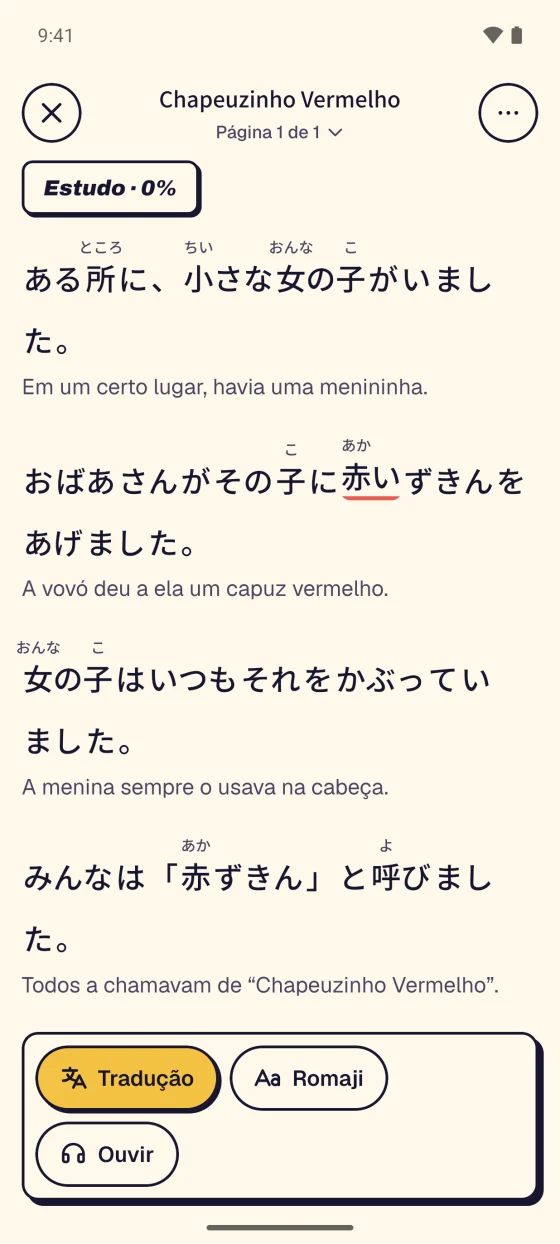
A reading becomes study in three moves: you read, tap a word, and it comes back at the right time.
The Fluentei lineStuck to Got it15 minutes a day
- 01よむRead, with furigana
- 02わかるTap a word and understand it
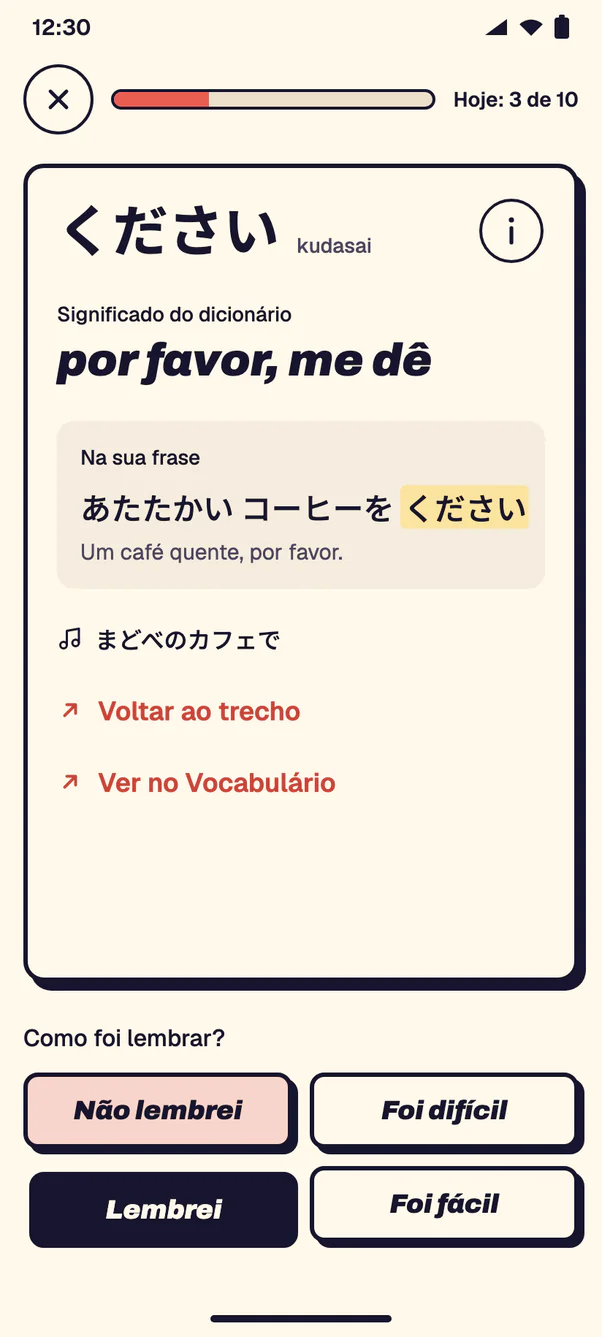
- 03おぼえてるRemember it at the right time

Who it’s for
It’s for you.
Questions
N3 reading, answered.

What can I read at N3?
At N3, you read texts with concrete content on everyday topics. In Fluentei’s N3 readings, the furigana sits above the kanji and every word is explained in English.
How many kanji do I need to read at N3?
There’s been no official number since 2010: the JLPT doesn’t publish a kanji list. By Jonathan Waller’s unofficial lists, there are 612 kanji up to N3, counting the levels below it; furigana lets you read before you know them all. How many kanji to learn, level by level.
Do the Readings follow the JLPT?
Each reading’s level is an approximate guide to its difficulty.
What comes after N3?
N2: you read clearly written texts on a range of topics, such as newspaper articles and commentary. Japanese reading practice at N2.
Read real Japanese. At your level.
Readings from N5 to N1, with furigana and every word explained in English.
Opens in a new tab.Coming soon to Google Play.